The morning the site went quiet
A field note on absence as an indicator: when the usual clutter at a site disappears, the empty frame can be the finding.
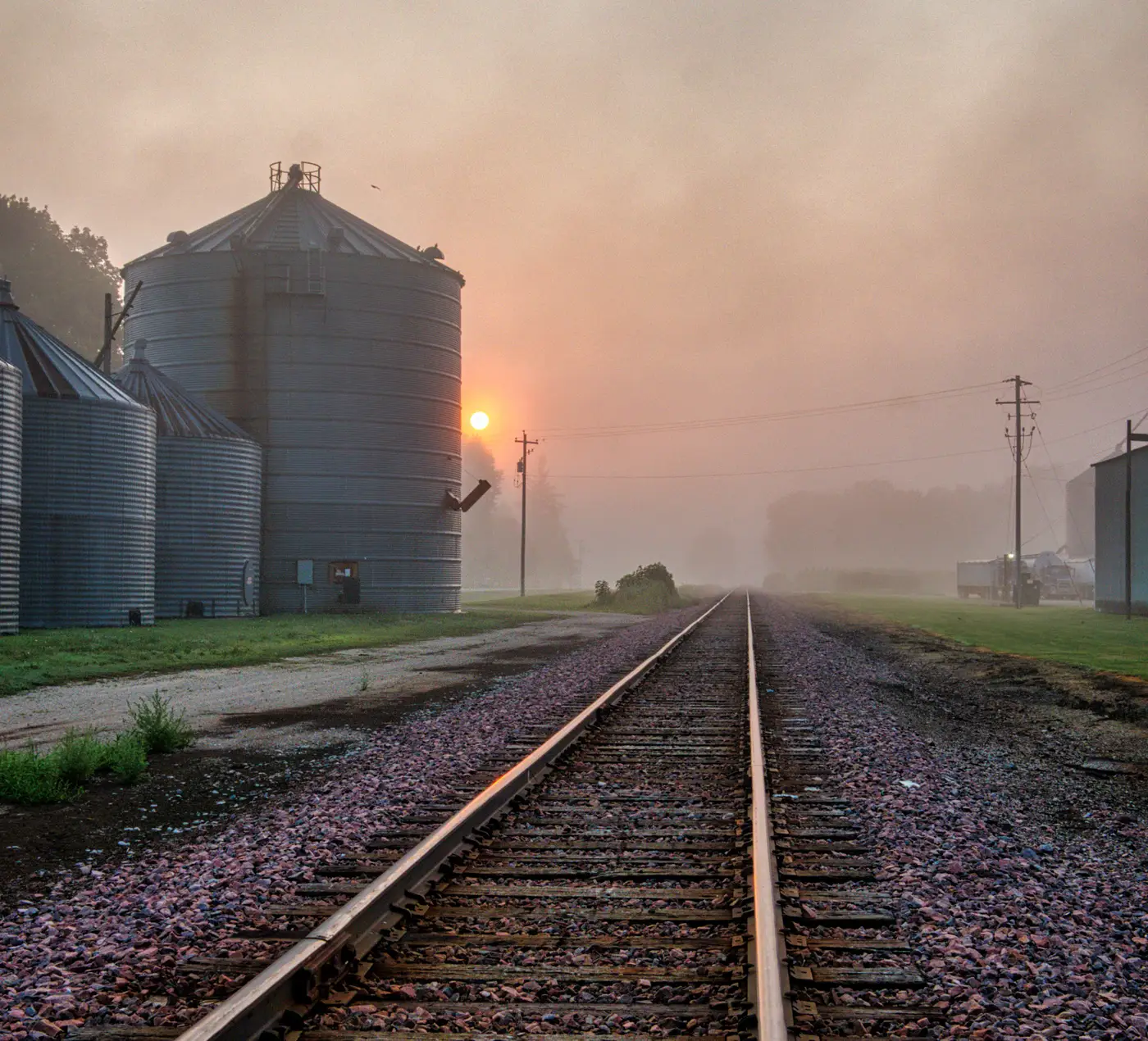
There's a particular kind of nothing that takes longer to notice than something.
I spent three years on a desk that watched a handful of industrial sites, the kind where the daily pass shows the same clutter every day: trucks staged by the loading dock, a forklift parked at the same odd angle, a stack of pallets that grows and shrinks but never disappears. You stop reading the image after a while and start reading the pattern. The eye goes straight to the dock, checks the count, moves on. Most mornings there's nothing to write up, and that's correct.
Then one morning the dock is empty. Not fewer trucks. None. The forklift's gone too, and the pallet stack that's been there since spring is gone with it. The lot looks swept.
The instinct, trained into most of us by years of looking for things that shouldn't be there, is to relax. No new construction, no vehicle buildup, no unexplained excavation. Nothing to flag. I nearly logged it that way myself, years ago, before someone more patient than me asked why I hadn't flagged it at all.
The site had never been empty before. In eleven months of daily coverage, that lot had never once gone to zero. An empty frame against a baseline that always shows activity isn't a quiet day. It's the anomaly.
That's the part that's hard to train into an analyst and harder to train into a workflow. Change detection, as most people build it, is tuned to catch arrivals: a new structure, a vehicle that wasn't there yesterday, a cleared patch of ground. It's built to notice addition. Subtraction is a different problem, because a reduction to zero doesn't register as an edge or a pixel shift against the background. It just looks like calm. You have to already know what the site normally does before an empty lot reads as a departure from it rather than a slow news day.
This is why a single image, however sharp, tells you less than you'd think on its own. A 30 cm frame of an empty yard is just a fact. It needs the preceding weeks, or months, sitting next to it before the fact becomes a finding. Enough accumulated normal lets you recognize the morning that normal stops happening, a deviation that a routine image-by-image review tends to wave through.
I think about that lot every time someone describes their coverage as "watching for changes," because the word hides an assumption. It assumes change always adds something to the frame. Sometimes the tell is a facility that goes dark two days before a shipment that was never supposed to be visible, or a parking pattern that drops to nothing the week before something happens somewhere else entirely. None of that shows up if your workflow is scanning each pass for new objects and nothing more.
A baseline built from enough repeat looks is what lets the software, or the analyst, know what normal has looked like for that specific patch of ground on that specific day of the week, and flags the morning the lot drops to zero. That's the whole premise behind a site that runs daily passes against its own accumulated history instead of judging each image in isolation, catching the gap in the pattern instead of just the thing that moved into frame.
Keep that lot in mind next time a site looks unremarkable. Unremarkable is only reassuring if you know what remarkable would have looked like.
If your pattern-of-life baseline is still built from memory and sticky notes, it might be worth letting Activity-Based Intel carry that history instead.