What counts as normal variance in a site activity baseline
A working definition of normal variance in pattern-of-life baselining, and how to separate noise floor from a real anomaly flag.
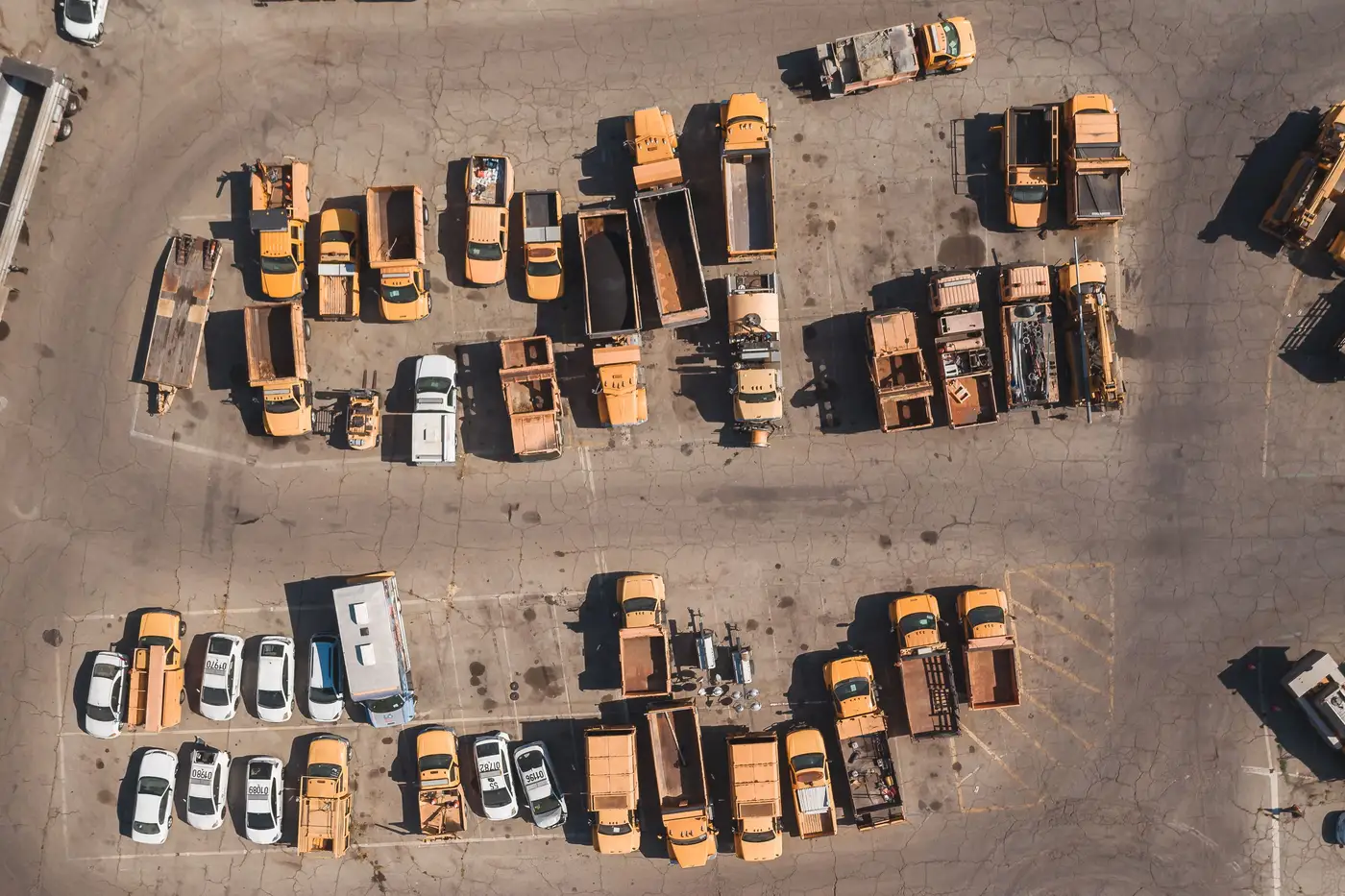
Every analyst who has tried to baseline a site runs into the same wall eventually: the site never looks exactly the same twice. Vehicle counts in the lot shift by a handful each day. Shadows lengthen and shorten with the season. A stack of material moves six meters left for no reason anyone can name. None of that is a signal. Most of it is just the site breathing.
The question that matters isn't "did something change." Something always changed. The question is whether the change falls inside the band of variation the site produces on its own, or outside it. That band is your noise floor, and defining it badly is the single most common reason pattern-of-life work either misses real activity or buries analysts in junk flags.
Noise floor versus signal
Noise floor in satellite imagery work means the amount of frame-to-frame difference you'd expect to see even if nothing operationally meaningful happened. It comes from a few predictable sources:
- Sun angle and shadow geometry. The same parked trailer casts a different shadow at 10:40 local than it does at 11:15, and a different one again in December than in June. A shadow edge moving across a few pixels is geometry, not an event.
- Routine turnover. Staff lots clear out over the weekend, and loading docks sit empty by Friday evening, so a baseline that doesn't already encode a weekday/weekend split will read every Saturday as an anomaly.
- Weather artifacts. Wet pavement reads darker. Light cloud haze softens edges and shifts apparent counts in a lot. Snow cover changes the whole scene's contrast.
- Sensor and collection differences. A slightly different look angle, a different pass time, a compression artifact at the edge of a tile. None of this is the site changing. It's the collection changing.
A baseline worth the name doesn't just average a bunch of passes into one picture. It has to carry the range of normal variation for each of these sources, by day of week, by season, by time of pass, so that "normal" means something more precise than "roughly what we've seen before."
Baseline drift and why re-baselining matters
The other failure mode is the opposite problem: a baseline that's too rigid to track a site that's legitimately changing. A construction yard mid-build looks different in month six than it did in month one. That's the site's real trajectory, and a baseline that doesn't move with it will keep tripping the same flag on real progress, until the analyst learns to ignore the system rather than trust it.
Baseline drift is the gradual shift in what "normal" means for a site as its routine genuinely changes: a new contractor rotation, a seasonal production cycle, a storage area that fills and empties on a quarterly cadence. A fixed threshold held forever can't track that. What tracks it is a baseline built from a rolling window of repeat daily observation, long enough to average out noise but short enough to keep up with a site's real tempo. That's the structural difference between a one-off comparison and a baseline accumulated from daily VHR looks over time, which is the only way to tell "this site's normal has shifted" apart from "this site did something new."
Keeping the false positive rate honest
A false positive anomaly flag costs more than the few minutes it takes to dismiss it. Enough of them and an analyst stops trusting the flag queue altogether, which defeats the entire point of automating the first pass. Tightening what counts as variance has to happen before the alert fires: build the day-of-week and seasonal expectation into the baseline itself, hold enough history that a single odd pass doesn't look like a trend, and treat shadow and weather artifacts as a known filter category instead of a surprise to investigate each time.
None of this means chasing a perfect threshold. It means being honest about what a site does on an ordinary Tuesday, so the imagery that deserves a second look doesn't get lost in the ones that don't.
If you're maintaining that baseline by eye against a folder of past passes, it's worth seeing what a system built to carry it for you looks like.